
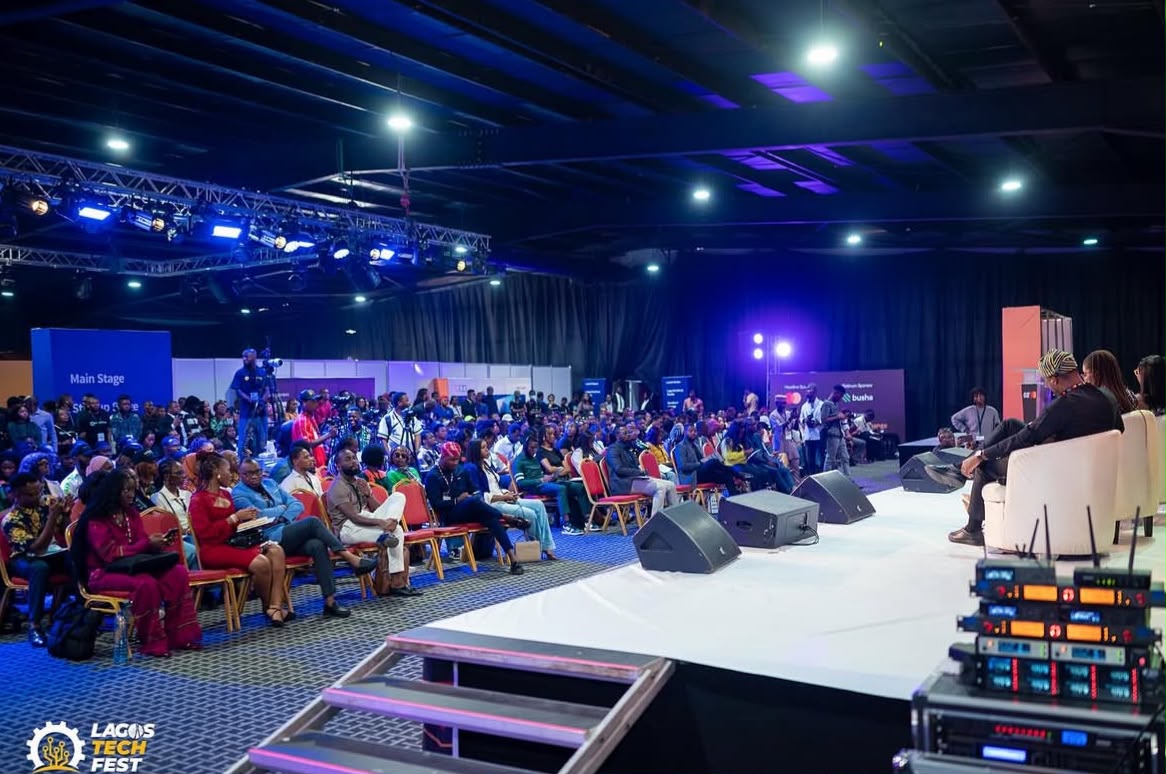
Lagos Tech Fest 2025 placed artificial intelligence at the centre of discussions about Africa’s next phase of business and economic transformation. Held from yesterday February 19 to today the 20, at the Landmark Event Centre, Victoria Island, Lagos, the fifth edition of the technology gathering brought together business leaders, entrepreneurs, investors, innovators and technology professionals to explore how emerging technologies can improve competitiveness, productivity and sustainable growth across the continent. Today marks the final day of the event, with activities concluding at the end of the day.
One of the major sessions was the AI and Innovation panel featuring Kehinde Ogundare, Seun Olatunji, Yewande Adewusi and Dotun Olowoporoku. The discussion focused on how artificial intelligence can move beyond experimentation and become a practical driver of business performance and economic growth across African markets. The panel emphasised the need for organisations to shift from simply discussing AI to identifying clear and measurable applications, including automating repetitive processes, improving operational efficiency, supporting faster decision-making and developing new products and services.
The session also highlighted the importance of organisational readiness and local innovation in determining Africa’s ability to benefit from AI. Successful adoption requires more than access to sophisticated tools; businesses need strong digital infrastructure, skilled talent, reliable data, appropriate governance frameworks and executive commitment. At the same time, Africa’s long-term competitiveness will depend on developing solutions that reflect the realities of local businesses and consumers, supported by greater investment in technology companies, workforce development and partnerships between the private sector, government and educational institutions.
As Lagos Tech Fest 2025 concludes today, the AI and Innovation panel leaves business leaders with a clear strategic message: artificial intelligence should be treated as a business capability rather than simply another technology purchase. Organisations that identify where AI and automation can create measurable value while maintaining human oversight in areas requiring judgment and accountability will be better positioned to improve productivity, strengthen customer experiences and compete in increasingly digital markets. With sustained investment in talent, infrastructure, governance and innovation, African businesses have an opportunity not only to adopt AI developed elsewhere, but also to help shape solutions that create jobs, strengthen industries and support long-term economic growth.
Great panel featuring Kehinde Ogundare, Seun Olatunji, Yewande Adewusi and Dotun Olowoporoku. Africa needs more conversations that connect emerging technology directly to productivity, competitiveness, employment and sustainable economic development.
Lagos Tech Fest continues to provide an important platform for conversations that matter to Africa’s technology ecosystem.
Having Kehinde Ogundare, Seun Olatunji, Yewande Adewusi and Dotun Olowoporoku discuss the practical future of AI made this session particularly valuable.
Seun Olatunji deserves special commendation for his contribution to this discussion. It was impressive to see the positive reactions and praise for the practical insights he shared on how technology and innovation can support African businesses.
I particularly appreciate the emphasis on local innovation. Africa should not simply become a consumer of AI solutions developed elsewhere.
The discussion involving Kehinde Ogundare, Seun Olatunji, Yewande Adewusi and Dotun Olowoporoku shows why locally relevant solutions must remain part of the conversation.
One of the panel’s strongest messages is that buying AI tools is not the same as becoming an AI-enabled organisation. Yewande Adewusi’s contribution to the wider conversation around readiness, people, systems and sustainable adoption is especially important.
It is encouraging to see conversations about AI in Africa becoming more focused on real business outcomes rather than hype. The contributions from Kehinde Ogundare, Seun Olatunji, Yewande Adewusi and Dotun Olowoporoku made this panel particularly relevant for tech entrepreneurs and business leaders.
The point about executive commitment should not be overlooked.
Businesses can invest heavily in AI, but without leadership, good data and clearly defined processes, the technology will struggle to deliver meaningful results.
An excellent discussion by Kehinde Ogundare and the entire panel.
This is the direction Africa’s AI conversation should be taking.
Not simply asking what AI can do, but asking where it can improve productivity, create opportunities and strengthen African industries.
Credit to all the panellists for keeping the discussion connected to practical outcomes.
Yewande Adewusi, Dotun Olowoporoku, Kehinde Ogundare and Seun Olatunji highlighted an important reality: Africa’s AI opportunity will depend just as much on talent, infrastructure, governance and investment as it does on access to powerful technology.
Seun Olatunji was rightly praised by many attendees for his thoughtful contribution. His perspective reinforced the need to look beyond technology adoption and think seriously about how innovation can solve practical problems and create measurable value.
This was a timely and important conversation for African businesses. Kehinde Ogundare, Seun Olatunji, Yewande Adewusi and Dotun Olowoporoku brought valuable perspectives to the discussion, particularly around moving AI from experimentation to practical business application.
Dotun Olowoporoku’s presence on this panel added another important perspective to the conversation.
Investment, innovation and the development of scalable African technology businesses will be essential if the continent wants to participate meaningfully in the AI economy.
Kehinde Ogundare, Seun Olatunji, Yewande Adewusi and Dotun Olowoporoku collectively brought attention to something many organisations need to hear: AI should solve identifiable business problems.
Technology without a clear use case quickly becomes another expensive experiment.
I was particularly impressed by the recognition given to Seun Olatunji for his contributions during the session.
Seeing participants praise and commend his insights shows the value of having experienced voices contributing to conversations shaping Africa’s technology future.
What stood out to me was the balanced approach to AI adoption.
Automation can improve efficiency and decision-making, but human judgment and accountability must remain central.
Seun Olatunji and his fellow panellists deserve commendation for advancing this kind of practical conversation.
A very relevant discussion for business owners who may currently be wondering where to begin with AI.
The message is clear: start with the business problem, identify measurable value, and then determine where technology belongs.
That is a much healthier approach than adopting AI simply because everyone is talking about it.
Seun Olatunji’s contribution clearly resonated with people at the event.
The commendation and positive feedback he received were well deserved. Africa needs more technology leaders willing to contribute practical ideas to conversations about innovation, growth and economic transformation.
This panel captures the bigger opportunity ahead for Africa.
With leaders such as Kehinde Ogundare, Seun Olatunji, Yewande Adewusi and Dotun Olowoporoku contributing to these discussions, the focus can gradually shift from Africa merely adopting global technology to building solutions designed for African markets and capable of competing globally.