
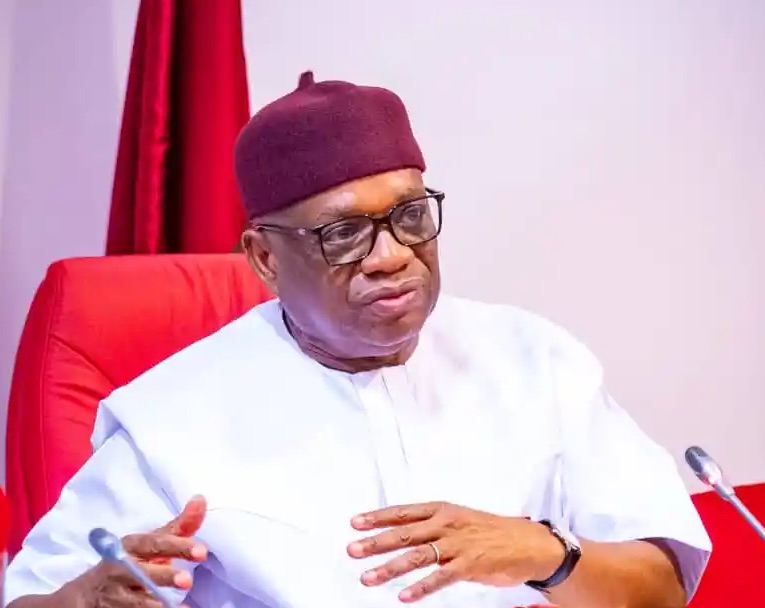
Orji Uzor Kalu is a Nigerian businessman, newspaper publisher and politician whose career has spanned entrepreneurship, manufacturing, banking, media and public service.
Born on 21 April 1960 in Abia State, Nigeria, Kalu rose from an early trading business built with a small amount of borrowed capital to establish SLOK Holding, a diversified business group with interests that extended into furniture, oil, publishing, banking, aviation and international trade.
His transition into politics saw him serve as Governor of Abia State from 1999 to 2007. He later returned to elective politics as the Senator representing Abia North, winning the seat in 2019 on the platform of the All Progressives Congress (APC). He has also been involved in newspaper publishing through the Daily Sun and New Telegraph.
Kalu’s career has combined business expansion, political influence, media ownership and a lengthy legal battle arising from corruption charges connected to his years as governor.
Early Life and Entrepreneurial Beginnings
Orji Uzor Kalu was born to Johnson Uzor Nesiegbe Kalu and Eunice Kalu.
His entrepreneurial journey began at a young age. According to accounts cited in the source material, Kalu started with just $35 borrowed from his mother. He used the money to enter the palm-oil trade, purchasing palm oil in eastern Nigeria and transporting it to northern markets for resale.
He later expanded into the furniture business, buying and reselling furniture on a larger scale.
These early ventures provided the foundation for what would eventually become a much broader business empire.
Education and Student Activism
Kalu’s early education included Christ the King School in Aba, Government College Umuahia and Barewa College in Zaria.
He subsequently enrolled at the University of Maiduguri, where he studied Political Science. During his time at the university, he became involved in student activism and participated in the “Ali Must Go” protests against the then Federal Commissioner for Education.
His participation resulted in his suspension from the university. While other students later pursued legal action against the institution, Kalu left university and turned his attention toward building his business.
He later obtained a degree from Abia State University and also received a Certificate in Business Administration from Harvard University, according to the supplied source. He was also awarded honorary doctorates by the universities of Maiduguri and Abia State.
Building the SLOK Business Empire
Kalu’s early trading activities eventually developed into a much larger corporate enterprise.
He established SLOK Holding, a conglomerate that grew to include companies involved in several sectors. The businesses listed in the source include Ojialex Furniture Company, SLOK Nigeria Limited, SLOK United Kingdom Limited, Adamawa Publishers Limited, SLOK Vegetable Oil, SLOK Paper Factory, SLOK United States Incorporated, SLOK Ghana, SLOK Togo, SLOK Cotonou, SLOK Guinea, SLOK South Africa, SLOK Liberia, SLOK Botswana, SLOK Korea, Supreme Oil Limited, SLOK Airlines, Sun Publishing Limited and First International Bank Limited.
The breadth of these interests reflected Kalu’s strategy of moving beyond trading into industrial, financial, media and service businesses.
At the age of 33, he became head of First International Bank Limited. He also played a role in Nigerian commercial relations with China’s SinoPacific Shipbuilding while serving as a principal of SLOK Holding.
Recognition as a Young Entrepreneur
Kalu received significant recognition during the early stages of his business career.
In 1986, at the age of 26, he became the youngest Nigerian recipient of the National Merit Award, according to the supplied material.
He was also recognised as the Industrialist of the Year by the Nigerian Chamber of Commerce. Other honours attributed to him include the Humanitarian Award of the University of Nigeria, Nsukka’s Humanitarian Club, the Volunteer Award of the International Association of Volunteers, an EU Special Award in Brussels, and the World Bank Leon Sullivan Award.
These recognitions helped establish Kalu as one of the prominent young businessmen emerging from Nigeria’s private sector during the 1980s and 1990s.
From Business to Politics
Kalu’s business career eventually led him into public life.
Before becoming governor, he served as chairman of the Borno Water Board and chairman of the Cooperative and Commerce Bank Limited.
In 1999, he contested for the governorship of Abia State under the Peoples Democratic Party (PDP) and won. He was re-elected in 2003, serving two consecutive terms from 29 May 1999 to 29 May 2007.
His administration made him a prominent figure in Nigerian politics and positioned him as one of the country’s better-known businessman-politicians.
In 2006, Kalu left the PDP and became associated with the Progressive Peoples Alliance (PPA). He later served as chairman of the party’s Board of Trustees and became its presidential candidate in the 2007 general election.
The EFCC Case and Legal Battle
Kalu’s political career was followed by a prolonged legal battle.
On 11 July 2007, shortly after leaving office as governor of Abia State, he was arrested by the Economic and Financial Crimes Commission (EFCC) over corruption allegations connected to his time in office.
Kalu was later released on bail and accused the administration of President Olusegun Obasanjo of political persecution. The supplied source notes that similar allegations were discussed by former United States Ambassador to Nigeria John Campbell in his book Nigeria: Dancing on the Brink.
The legal proceedings continued for years.
In December 2019, the Lagos Division of the Federal High Court convicted Kalu and sentenced him to 12 years in prison over a fraud case involving ₦7.65 billion. The case concerned allegations that funds belonging to the Abia State government had been diverted through SLOK Nigeria Limited.
Kalu was subsequently held in custody and sought bail while challenging the conviction.
Supreme Court Nullifies Conviction
The case took a major turn in May 2020, when the Supreme Court of Nigeria nullified Kalu’s conviction and ordered a retrial.
The seven-member panel held that the trial had been improperly conducted because the judge who convicted Kalu had already been elevated to the Court of Appeal at the time of delivering the judgment.
The Supreme Court therefore declared the conviction invalid and directed that the case be reassigned for a fresh trial.
Kalu was released from custody in June 2020.
The legal episode became one of the most significant chapters of his public career, following years of proceedings between his original arrest in 2007 and the Supreme Court’s intervention in 2020.
Return to the Senate
After several years away from elective office, Kalu returned to politics at the national level.
In the 2019 general election, he contested the Abia North Senatorial District seat under the APC and defeated the incumbent senator, Mao Ohuabunwa, by more than 10,000 votes according to the supplied source.
He assumed office as senator on 11 June 2019.
During the Ninth National Assembly, Kalu served as Senate Majority Whip from July 2019 until June 2023. In the Tenth Senate, he was named chairman of the Senate Committee on Privatization in August 2023.
His return to the Senate marked a new phase of his political career, moving from state-level executive leadership to federal legislative politics.
Newspaper Publishing and the Media Business
Kalu has also built a significant presence in Nigeria’s newspaper industry.
He is identified as chairman of Daily Sun, a Nigerian newspaper established in the early 2000s. The newspaper began as a weekly publication before becoming a daily newspaper in 2003.
Under Kalu’s wider media interests, the publication became one of the prominent newspapers in Nigeria.
He is also chairman of New Telegraph, a newspaper focused on political, social and cultural coverage for readers in Nigeria and abroad.
His involvement in publishing expanded the SLOK business interests into the media sector and gave Kalu an influential platform within Nigeria’s public discourse.
The Njiko Igbo Movement
Kalu has also been associated with the Njiko Igbo Movement, an organisation focused on advocating for greater political representation for people of Igbo extraction at the highest levels of government.
The movement has developed branches and support groups in Nigeria and among members of the Igbo diaspora.
Kalu launched the organisation alongside former senator Emmanuel Onwe, a lawyer and human-rights advocate.
The movement formed part of Kalu’s broader political advocacy around the representation of the South-East in Nigeria’s national leadership.
Political Evolution
Kalu’s political career has crossed several party lines.
He began his governorship under the PDP, left the party in 2006 and became associated with the PPA, under which he contested the presidency in 2007.
He subsequently returned to the PDP before later joining the APC in 2016.
His political journey illustrates the shifting alliances that have characterised Nigerian party politics over the past several decades.
In 2018, he was reportedly honoured with the traditional title Danbaiwan-Hausa by the Emir of Daura, in President Muhammadu Buhari’s hometown.
Personal Life
Orji Uzor Kalu married Ifeoma Ada Menakaya in December 1989 in his hometown of Igbere, Abia State.
The couple have four children: Neya Uzor Kalu, Michael Uzor Kalu, Olivia Uzor Kalu and Nicole Uzor Kalu.
A Career Spanning Business, Media and Politics
Orji Uzor Kalu’s career has moved through several distinct phases.
He began as a young trader working with limited capital, built a diversified business group through SLOK Holding, entered politics and governed Abia State for eight years before returning to national politics as a senator.
His business interests have included manufacturing, oil, furniture, banking, aviation, publishing and international trade, while his media interests have placed him among Nigeria’s prominent newspaper proprietors.
At the same time, his public career has been shaped by controversy, particularly the long-running corruption case that culminated in a 2019 conviction and a subsequent Supreme Court decision in 2020 that nullified the conviction and ordered a retrial.
Orji Uzor Kalu Today
Orji Uzor Kalu remains one of the notable figures in Nigeria’s intersection of business, politics and media.
His story reflects the trajectory of an entrepreneur who transformed a modest trading operation into a broad business empire before moving into state and national politics.
From the early days of trading palm oil and furniture to building SLOK Holding, governing Abia State, establishing a presence in Nigeria’s newspaper industry and returning to the Senate, Kalu’s career has been defined by ambition, expansion and political influence.
His legacy remains closely associated with both his entrepreneurial rise and his decades-long participation in Nigerian public life.
Editorial Note
This biography is based on the supplied source material. Because the source contains historical claims, legal matters and political positions that may have changed or developed after the cited periods, current office, present political role, the status of any retrial following the 2020 Supreme Court decision, and current ownership or circulation figures for the newspapers should be independently verified before publication.