
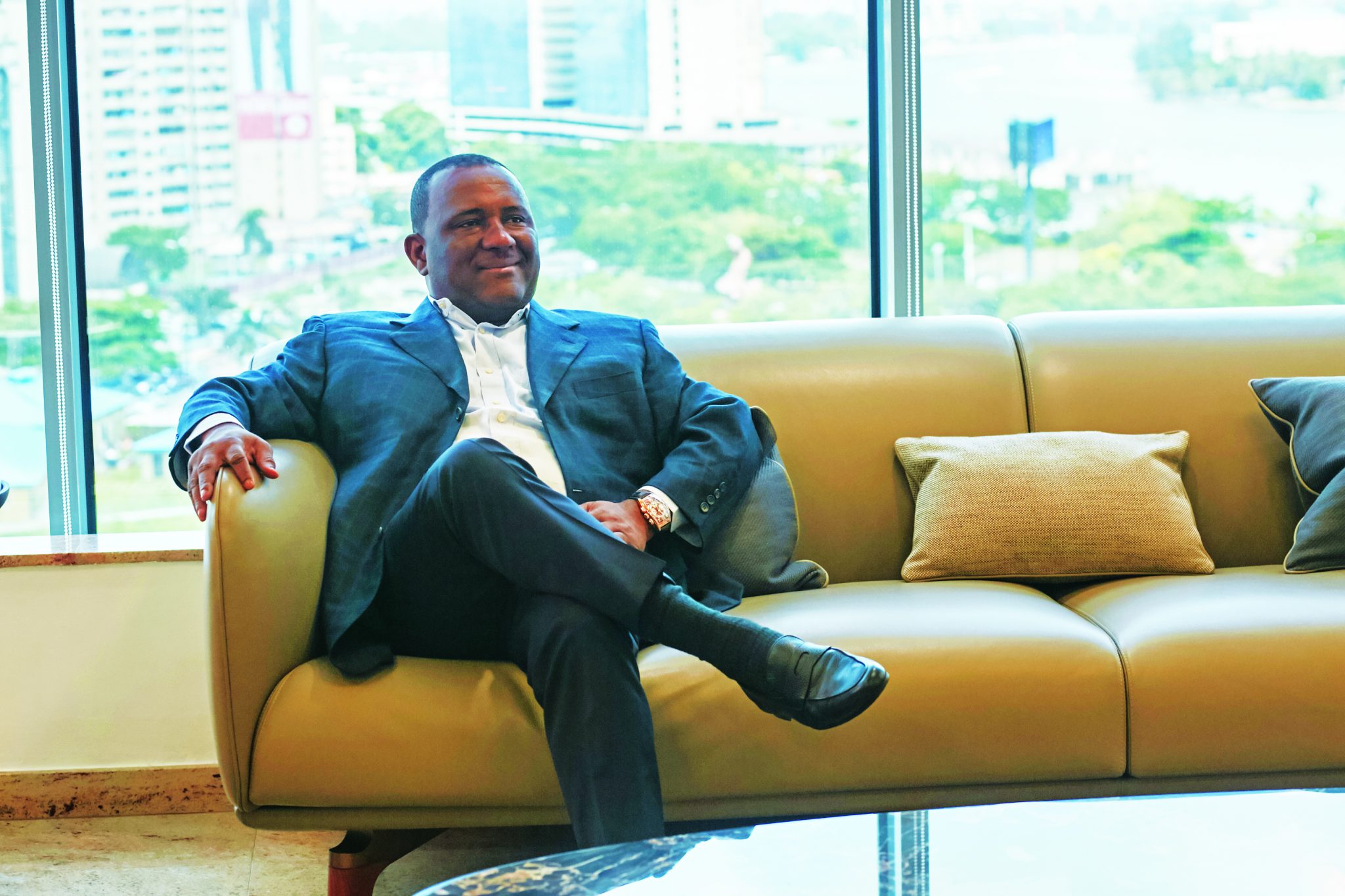
Abdul Samad Isyaku Rabiu is a Nigerian businessman, industrialist and philanthropist best known as the founder and chairman of BUA Group, one of Nigeria’s major diversified industrial conglomerates. His business interests span cement production, food processing, sugar refining, steel and infrastructure. He also serves as chairman of BUA Cement Plc and BUA Foods Plc, two publicly listed companies.
Rabiu is recognised for his role in expanding Nigeria’s domestic manufacturing capacity and investing in industries that support economic development. Through his business operations and philanthropic initiatives, he has contributed to projects in healthcare, education and infrastructure across Nigeria and other parts of Africa.
Early Life and Education
Abdul Samad Isyaku Rabiu was born on 4 August 1960 in Kano, in northern Nigeria. He grew up in a prominent business family led by his father, Isyaku Rabiu, a well-known Nigerian industrialist whose commercial interests expanded significantly during the 1970s and 1980s.
Rabiu pursued higher education at Capital University in Columbus, Ohio, United States. Following his studies, he returned to Nigeria to become involved in the family business and develop his own commercial interests.
His early exposure to business, combined with his experience in international education, helped shape his subsequent entry into commodity trading, manufacturing and industrial investment.
Building BUA Group
The Beginnings of BUA International
In 1988, Rabiu established BUA International Limited, initially focusing on commodity trading. The company imported essential products, including rice, edible oil, flour, iron and steel.
Its early operations provided a foundation for expansion into industrial activities. Rather than remain focused on importing and distributing commodities, the company began pursuing opportunities to participate directly in production and processing.
Expansion into Steel
A significant opportunity emerged in 1990 when the government-owned Delta Steel Company contracted BUA to supply raw materials in exchange for finished products.
The arrangement supported the company’s growth and helped it expand into steel-related activities. BUA subsequently developed interests in steel production, including the production of billets, iron ore imports and the establishment of rolling mills in Nigeria.
These investments formed part of Rabiu’s broader business strategy of building domestic industrial capacity and reducing dependence on imported finished products.
Entry into Food Processing
BUA later expanded into food processing through the acquisition of Nigerian Oil Mills Limited, identified in the source material as one of Nigeria’s largest edible-oil processing companies.
In 2005, the group established flour-milling operations in Lagos and Kano, strengthening its position in Nigeria’s food supply chain.
The expansion into food production helped diversify the company’s revenue streams and broaden its involvement in industries that serve Nigeria’s growing consumer market.
Sugar Refining
In 2008, BUA commissioned a major sugar refinery, which the source describes as the second-largest sugar refinery in sub-Saharan Africa at the time.
The investment challenged the established structure of Nigeria’s sugar industry and represented another step in the group’s transition from commodity trading into large-scale manufacturing.
Sugar refining became an important part of BUA’s food and industrial portfolio, alongside its other processing operations.
Cement and Infrastructure
BUA expanded into cement manufacturing in 2009, when it acquired a controlling interest in a publicly listed cement company in northern Nigeria.
The group subsequently began developing a cement plant in Edo State, with the project valued at approximately US$900 million in the source material. Construction was completed in early 2015.
Cement production became a central part of BUA’s industrial operations, positioning the group within Nigeria’s construction and infrastructure supply chain.
Through its cement business, the company participates in a sector closely linked to housing, commercial construction, roads and other infrastructure projects.
Leadership at BUA Cement and BUA Foods
Rabiu’s leadership extends to BUA Cement Plc and BUA Foods Plc, publicly listed companies that represent key parts of the group’s industrial portfolio.
BUA Cement focuses on cement manufacturing, supplying a material essential to construction and infrastructure development. BUA Foods operates in food production and processing, including activities associated with sugar, flour and other food products.
Together, these businesses reflect the group’s emphasis on large-scale production in sectors with significant domestic demand.
Rabiu’s business model has centred on diversification, investment in manufacturing infrastructure and expansion across related industries. The group’s activities have helped establish it as a major participant in Nigeria’s industrial economy.
Role in Nigeria’s Business Sector
Rabiu has built his business interests across sectors that support everyday consumption and economic activity. His investments in food processing, cement and steel place BUA Group within important parts of Nigeria’s manufacturing and industrial supply chains.
The company’s expansion from commodity trading into manufacturing illustrates a strategy of moving further along the production chain. This approach can create opportunities for local processing, industrial employment and the development of supporting businesses.
Rabiu has also held public-sector responsibilities, including serving as chairman of Nigeria’s Bank of Industry, an institution associated with financing industrial development.
His career has made him one of the prominent figures in Nigeria’s private sector, particularly in discussions about manufacturing, domestic production and industrial investment.
Philanthropy and Social Investment
Beyond his commercial activities, Rabiu has supported philanthropic initiatives focused on healthcare, education and community development.
BUA Foundation
Through the BUA Foundation, Rabiu has supported projects intended to improve access to essential services.
Among the projects attributed to the foundation are the construction of a 7,000-square-metre paediatric ward at Aminu Kano Teaching Hospital and the establishment of a Centre for Islamic Studies at Bayero University Kano.
These projects reflect an emphasis on supporting healthcare facilities and educational institutions.
Abdul Samad Rabiu Initiative for Africa
In 2021, Rabiu established the Abdul Samad Rabiu Initiative for Africa (ASR Africa), which he also chairs.
The initiative focuses on strategic social investments in healthcare, education and infrastructure across Nigeria and other African countries. According to the source material, Rabiu committed US$100 million annually to support the initiative’s activities.
ASR Africa represents a structured approach to philanthropy, with an emphasis on projects intended to address social needs and support development in communities.
Through the initiative, Rabiu has sought to extend his contribution beyond the commercial sector and support improvements in essential services and public infrastructure.
Wealth and Business Recognition
Rabiu is widely recognised as one of Africa’s wealthiest businesspeople. His wealth is closely associated with his ownership interests in BUA Group and its publicly listed businesses.
The source material cites estimates placing his net worth above US$14 billion in 2026, while earlier reporting by Forbes placed his wealth at approximately US$11.2 billion in July 2020.
Such estimates can fluctuate with market valuations, company performance and changes in the value of shareholdings. His standing among Africa’s wealthiest individuals reflects the scale of his investments in manufacturing, food processing and infrastructure-related industries.
Awards and National Honours
Rabiu has received national honours in recognition of his business activities and contributions to Nigeria.
His recognitions include:
- Commander of the Order of the Federal Republic (CFR): Conferred in 2022 by the Nigerian government.
- Commander of the Order of the Niger (CON): A Nigerian national honour listed among his distinctions.
- Grand Commander of the Order of Merit of Niger (GCON): Listed in the source material among his honours associated with Niger Republic.
These distinctions form part of the public recognition of his business career and wider contributions.
Personal Life
Rabiu is the son of the late Isyaku Rabiu, the Nigerian industrialist whose business activities influenced the family’s commercial background.
The source material identifies four children: Khadija Cookie Rabiu, Isyaku Khalifa Rabiu, Junaid Rabiu and Rania Rabiu. It also identifies Nafiu Rabiu and other members of the Rabiu family among his relatives.
Rabiu generally maintains a public profile focused on his business interests, corporate leadership and philanthropic activities.
Legacy and Influence
Abdul Samad Rabiu’s career reflects the development of a Nigerian business enterprise from commodity trading into large-scale manufacturing and industrial investment.
Through BUA Group, he has built interests in sectors that play significant roles in Nigeria’s economy, including cement, food processing, sugar refining and steel. His leadership of BUA Cement and BUA Foods has further strengthened his association with domestic manufacturing and publicly listed industrial businesses.
His philanthropic activities, particularly through the BUA Foundation and ASR Africa, extend his work into healthcare, education and infrastructure.
Rabiu’s business trajectory illustrates the opportunities and challenges involved in developing large industrial enterprises in African markets. His continued investment in manufacturing and social initiatives places him among the influential figures shaping discussions about Nigeria’s industrial capacity, private-sector development and Africa’s economic future.